
For content service providers, Germany has always had a reputation.
It is seen as complex. Highly regulated. Slow to change. A market where many have tried, and more than a few have quietly exited. In recent years, that perception has hardened, especially as other regions have delivered faster growth with fewer constraints.
But that view is increasingly out of date.
What we are seeing now is a market that has been deliberately reshaped. Not softened, not loosened, but stabilised. And for CSPs that understand how Germany really works today, that stability is creating a very real opportunity.
A market that chose sustainability over volume
Germany did not stumble into its current position. Regulatory tightening over recent years forced a reset across the value chain. Aggregators, service providers, and networks were required to raise standards around transparency, consumer protection, and accountability.
The result was predictable. A large number of players left the market. Those that remained adapted.
What is often missed is what came next.
The German market today is not “closed”. It is curated. The focus has shifted away from volume-driven acquisition towards services that can demonstrate value, legitimacy, and long-term consumer acceptance. That applies across the ecosystem, from how services are approved, to how they are priced, marketed, and supported.
For CSPs, this changes the conversation entirely. The question is no longer “how quickly can I launch?” but “does my service belong here?”
Understanding the reality of market entry
Most CSPs entering Germany will do so via off-portal mechanics. That is simply the commercial reality. Operator-owned portals still exist, but they are highly selective and not a practical entry route for most third-party services.
Off-portal does not mean unstructured.
On the contrary, it is where the highest expectations sit.
Service approval in Germany, certainly via the most successful and sustainable routes to market, now goes well beyond basic technical integration. Providers should expect detailed scrutiny around:
- The underlying content and its differentiation
- Proof of rights and licensing for branded or premium material
- The consumer value proposition relative to price
- How customers are informed, billed, supported, and able to exit
This is not about gatekeeping for its own sake. It is about preventing the market from drifting back to the behaviours that caused damage in the past.
CSPs offering “me too” services, repackaged free content, or propositions that rely on underhand marketing activities rather than value will struggle. Those with clear differentiation and a credible consumer story will find the conversation very different.
Consumer protection is no longer theoretical
One of the defining characteristics of the German market is that consumer protection is operationalised, not just documented.
Cancellation and revocation processes are expected to be simple, visible, and effective. Refunds are treated as part of the service lifecycle, not an exception. Customer care is assumed to exist and to be measurable.
For CSPs coming from markets without this level of consumer protection, this can feel challenging. But it is also one of Germany’s strengths.
Services that are designed to survive in this environment tend to be more resilient elsewhere. They generate fewer complaints, build better relationships with partners, and are easier to scale responsibly.
In that sense, Germany, like many European markets, is not about quick wins but about proving long-term viability.
Pricing realism matters more than ever
Another clear shift is around pricing strategy.
German consumers are highly subscription-aware. They compare. They question. They cancel when expectations are not met.
Successful services increasingly anchor their pricing against what consumers already trust and understand in the wider digital economy. The emphasis is not on what can be charged, but on what consumers are willing to pay over time.
For CSPs, this means the commercial model must stand on genuine customer value, not on customers accidentally subscribing, forgetting to cancel or struggling to exit. Acquisition costs, pricing, retention, and customer care all need to align. When they do, the upside is lower churn, fewer refunds, and stronger long-term value.
Why the opportunity is widening, not shrinking
Despite its discipline, Germany is not standing still.
We are seeing growth and experimentation in areas that go beyond traditional mVAS models:
- Carrier billing embedded into app-centric physical services such as mobility and EV charging
- Increased interest in direct carrier billing as an alternative to app store payments as regulatory frameworks evolve
- Emerging transaction models using messaging channels, where discovery, purchase, and delivery happen in one place
These developments are not about replacing existing payment methods. They are about expanding choice, improving conversion, and reducing friction in contexts where cards and wallets are not always ideal.
For CSPs with the right propositions, this creates room for innovation without lowering standards.
What partners across the value chain are aligning around
One of the most encouraging changes we see is greater alignment across the ecosystem.
Networks are not trying to be content companies. Aggregators are not trying to maximise short-term volume at any cost. Regulators are not looking to shut the market down.
Instead, there is a shared understanding that sustainable revenue comes from services consumers recognise, understand, and choose to stay with.
That alignment does not remove complexity, but it does reduce unpredictability. And in a market like Germany, predictability is a powerful enabler.
A final word to CSPs considering Germany
Germany is not a market for shortcuts.
It rewards preparation, patience, and partnership. It expects CSPs to arrive with services that stand on their own merits and to operate with a level of maturity that matches the environment.
For those willing to meet that bar, Germany offers something increasingly rare: a regulated market where growth is possible because trust has been rebuilt.
At MCP Insight, we work across the value chain to help that trust hold. At MCP Insight, we work across the value chain to help services succeed long term by bringing clarity and consistency to how markets operate, so growth does not come at the expense of trust or continuity.
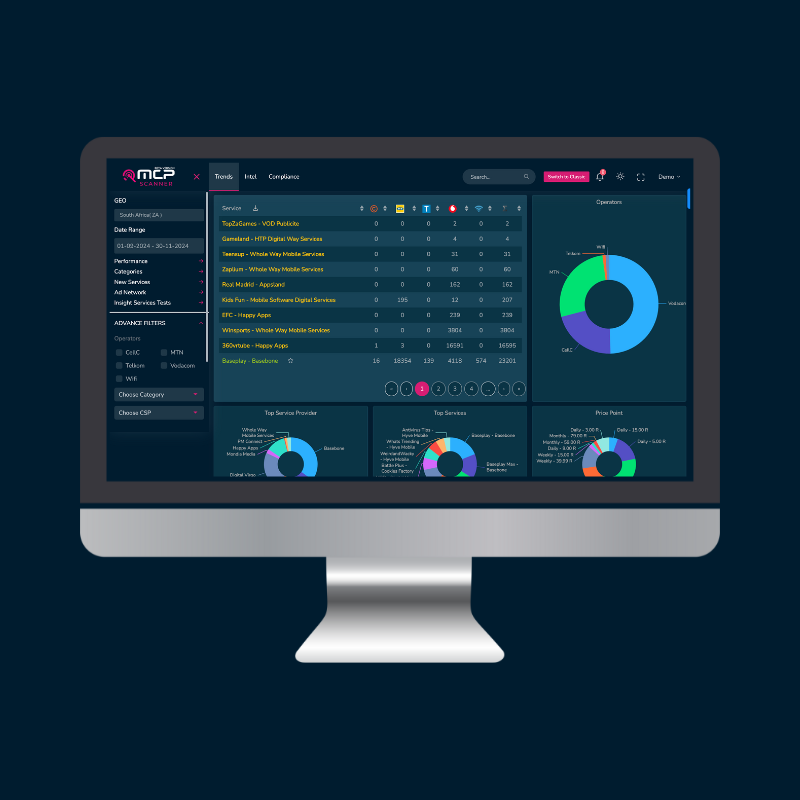
For CSPs ready to engage seriously with the German market, the opportunity is very much alive. Clear visibility into market dynamics, partner expectations, and consumer outcomes is what allows services to launch confidently and scale without disruption.
For access to German market intelligence that supports informed, sustainable entry, speak to our team.