
Mobile payment fraud is becoming more adaptive. At the same time, businesses need fast customer journeys, strong conversion and the confidence to grow across different traffic sources and markets.
This creates a difficult commercial challenge. Controls must identify genuine risk without introducing unnecessary friction or allowing harmful activity to undermine confidence across the value chain.
In this interview, Geoff Cleaves, Head of Product at MCP Insight, and a fraud and AI subject matter expert, explains why effective fraud prevention requires more than a high block rate. He discusses how fraud is changing, what businesses should expect from a modern anti-fraud solution and why technology must be supported by evidence, explainability and an experienced partner.
The Central Challenge: Growth and Fraud Use the Same Low-Friction Journeys
Mobile payments and digital services grow when the customer journey is quick and straightforward. Unfortunately, the same low-friction experience can also create opportunities for fraud.
The answer is not to make every journey more difficult. Nor is it simply to block more activity.
Businesses need to identify harmful behaviour precisely enough to reduce fraud while allowing genuine customers to complete their purchases. That requires fraud prevention to be considered alongside conversion, complaints, customer experience, partner confidence and long-term revenue.
As Geoff explains, the objective is to limit harmful revenue while creating the conditions for clean, sustainable growth.
How is mobile payment fraud changing?
Fraud is becoming better at imitating genuine customer behaviour.
Fraudsters can use automation and AI to test journeys, identify weaknesses and adapt when a particular route is closed. This means that a rule which works today may become less effective as the behaviour changes.
Static fraud rules still have a role, but they cannot be the whole response. A modern anti-fraud solution must be able to recognise unusual patterns, connect related signals and respond as those patterns evolve.
In simple terms, fraud is learning. Fraud prevention must keep learning too.
This makes the speed of adaptation important. The longer it takes to identify a new pattern, investigate it and update the response, the longer harmful activity may be able to continue.
Why does mobile payment fraud affect more than individual transactions?
The direct cost of a fraudulent transaction may be relatively small. Its wider effect can be much greater.
Unchecked fraud can lead to:
- More complaints, refunds and customer service work
- Disputes between merchants, aggregators and carriers
- Reduced confidence in a traffic source or service
- Additional friction within payment journeys
- Pressure on commercial margins and payouts
- Damage to consumer trust
- Restrictions on services, traffic sources or payment flows
- A carrier questioning whether an entire market remains sustainable
Fraud prevention therefore has an ecosystem-wide role. It helps maintain confidence between the businesses that acquire traffic, provide services, process payments and give customers access to carrier billing.
When that confidence is lost, the commercial effect can extend far beyond the transactions where fraud first appeared.
Why is block rate not enough?
A block rate tells a business how much activity was stopped. It does not show whether the right decisions were made.
Context matters. The level and type of risk can differ considerably between markets, services, customer journeys and traffic sources. A figure that appears reasonable in one situation could indicate a serious problem in another.
A more useful assessment asks:
- What behaviour caused the decision?
- How strong were the risk signals?
- Was the activity likely to be genuinely harmful?
- Can the decision be explained to a commercial partner?
- What effect are the controls having on conversion and customer experience?
- What risk signals are present in the traffic that continues to convert?
- Is the response aligned with the organisation’s risk appetite?
The aim is not to maximise or minimise the number of blocks. It is to make precise and proportionate decisions that support the health of the business and the wider payment ecosystem.
What should a modern anti-fraud solution provide?
Geoff identifies four connected requirements.
Speed
Fraud analysis must happen quickly enough to support a real-time customer journey. Slow technology can introduce friction and affect conversion, even when the eventual decision is correct.
Precision
The solution must distinguish genuine risk from normal customer behaviour as accurately as possible. Broad or poorly targeted controls can affect legitimate transactions and make it harder to understand the true quality of the traffic.
Proportionate action
Not every unusual signal carries the same level of risk. The response should reflect the strength and combination of the available evidence rather than treating every anomaly as an immediate reason to block.
Explainability
The evidence behind a decision should be recorded when that decision is made.
If the reasoning cannot be explained later, teams may have to reconstruct events from incomplete information. That slows investigations, makes partner discussions more difficult and limits the organisation’s ability to improve its controls.
Explainability is therefore not simply a reporting feature. It is part of being in control of the anti-fraud process.
Why does the relationship with the anti-fraud provider matter?
Technology is only part of the decision.
Businesses should also ask how quickly their provider identifies changing fraud patterns, how proactively it communicates and whether it can support informed conversations about risk and commercial priorities.
A useful anti-fraud partner should be able to:
- Identify relevant patterns before they become widespread
- Explain why particular activity was flagged or blocked
- Help investigate disputed decisions
- Discuss how controls relate to the customer journey and commercial objectives
- Refine the response as threats and traffic patterns change
- Bring experience from across the wider mobile payments ecosystem
This creates a continuous feedback loop. Evidence from the platform informs the discussion, and the discussion helps ensure that the controls remain appropriate as the market changes.
Bringing Anti-Fraud into the Unified MCP Insight Platform
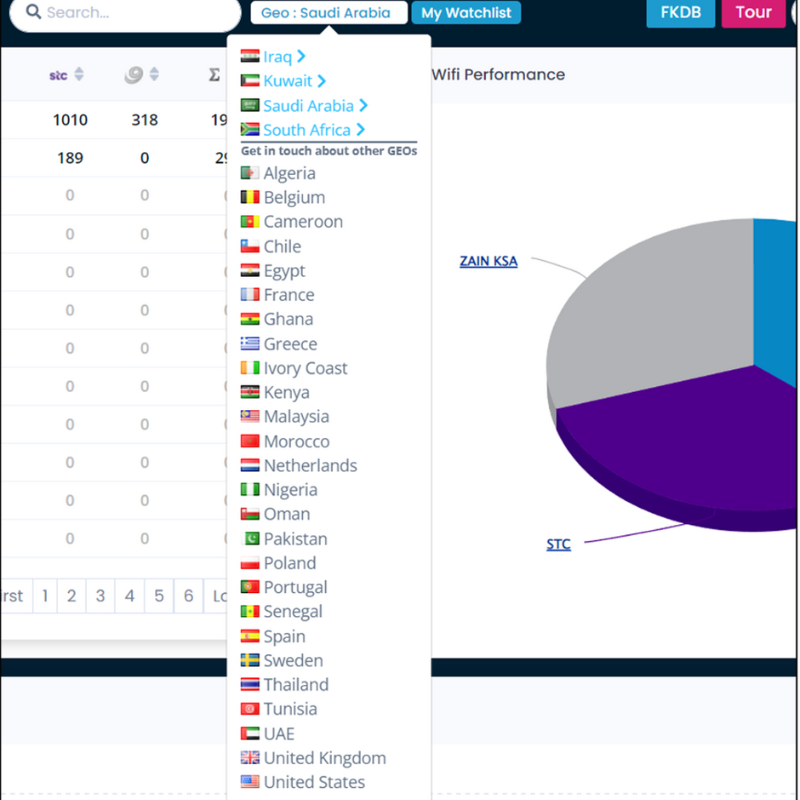
MCP Insight’s anti-fraud capability, known to existing customers as MCP SHIELD, is becoming part of the unified MCP Insight platform.
The aim is to connect real-time fraud detection with clearer decision evidence and the wider market and risk information businesses need to grow sustainable mobile payment revenue.
In the interview, Geoff discusses an experience designed to:
- Detect suspicious activity in real time while keeping the customer journey responsive
- Record the reasons behind a decision when it is made
- Help users investigate and explain individual decisions
- Support a proportionate response to different levels of risk
- Use automation to respond more quickly as fraud patterns change
- Bring fraud evidence together with wider market intelligence and risk management
The new version will also introduce an AI assistant designed to help users understand decisions and investigate routine questions more efficiently. A future automated landing-page testing capability is intended to identify common integration problems and improve time to value.
Together, these developments are intended to turn fraud signals into clear, defensible business decisions.
Key takeaways
- Mobile payment fraud is becoming more adaptive and better at imitating genuine behaviour.
- The commercial effect of fraud extends beyond refunds to customer trust, partner confidence and market sustainability.
- Block rate alone cannot show whether an anti-fraud solution is making the right decisions.
- Effective controls must be fast, precise, proportionate and explainable.
- Decision evidence should be recorded at the time of the transaction, not reconstructed only when a dispute occurs.
- Businesses should evaluate the expertise and responsiveness of their anti-fraud partner as well as the technology.
- Connecting fraud evidence with wider market and risk intelligence can help businesses make better-informed growth decisions.
Watch the conversation
Watch the full interview to hear Geoff’s perspective on the changing fraud landscape, the limitations of traditional measures and what businesses should expect from anti-fraud solutions for mobile payments.
To learn more about MCP Insight’s anti-fraud capability or see the new experience in action, contact us to arrange a demonstration.