
A High-Growth Opportunity That Rewards Visibility
If you’ve ever tried to launch in a new mVAS market without clear visibility, you’ll know the feeling. On paper, everything looks promising. Strong mobile penetration figures. Growing smartphone adoption. A clear appetite for digital content.
Then you go live… and realise the market doesn’t behave the way you expected.
Bangladesh is one of those markets where the opportunity is undeniable. But success tends to favour those who understand what’s actually happening on the ground, not just what the headlines suggest.
A market built for scale, but shaped by nuance
Start with the fundamentals.
Bangladesh has around 186 million mobile subscriptions, with SIM penetration just over 100% – reflecting a highly connected market, albeit one where multiple SIM ownership is common. Nearly all of that base is prepaid, which matters. It means billing needs to be frictionless, low value, and instant.
Direct Carrier Billing fits that model perfectly.
Add to that a young population, with almost half under 30, and a growing appetite for gaming, streaming, and digital services. There’s also a large unbanked population, so for many users, DCB isn’t just convenient, it’s the one of the only viable payment methods available.
From the outside, it looks like a textbook growth market.
But underneath, it’s more layered.
The operator landscape tells a different story
While Grameenphone leads in overall subscriber share, campaign activity shows a slightly different dynamic.
According to our recent market data, Airtel is currently dominating advertising traffic, accounting for around 66.9% of share, compared to 27.8% for Grameenphone and just over 5% for Banglalink.
That’s an important distinction.
MNO subscriber share tells you where users are. Advertising share tells you where money is being actively deployed.
And those two things don’t always align.
If you’re entering the market, this is the kind of insight that shapes your initial strategy. Which operator you prioritise. Where you test first. Where you scale.
What actually performs in Bangladesh?
There’s a clear pattern in the types of services gaining traction.
Games dominate the market, accounting for roughly 39% of activity, followed by mixed content portals and e-learning services.
That mix is telling.
It reflects both entertainment demand and a more practical, utility-driven layer of content. It’s not just about quick wins with gaming. There’s also sustained engagement in education and lifestyle services.
Looking at specific services, names like OnmoGames, ShadhinMusic, and DeenIslamic are consistently appearing among the most visible offers in the market.
Again, useful context.
Not because you want to copy what’s already there, but because it helps you understand:
- what users are responding to
- how services are positioned
- and how crowded each category really is
There’s a difference between entering a growing market and entering a saturated category within that market.
Billing flows: friction matters more than features
Bangladesh is not a one-size-fits-all billing environment.
The dominant flow today is MSISDN + PIN on Grameenphone and Banglalink, accounting for close to 60% of activity, with 1-click and hybrid flows making up the rest.
Different flows, different dynamics.
The compliance reality: growth with scrutiny
Bangladesh is not a “launch and forget” market. Regulation is active, and enforcement is real.
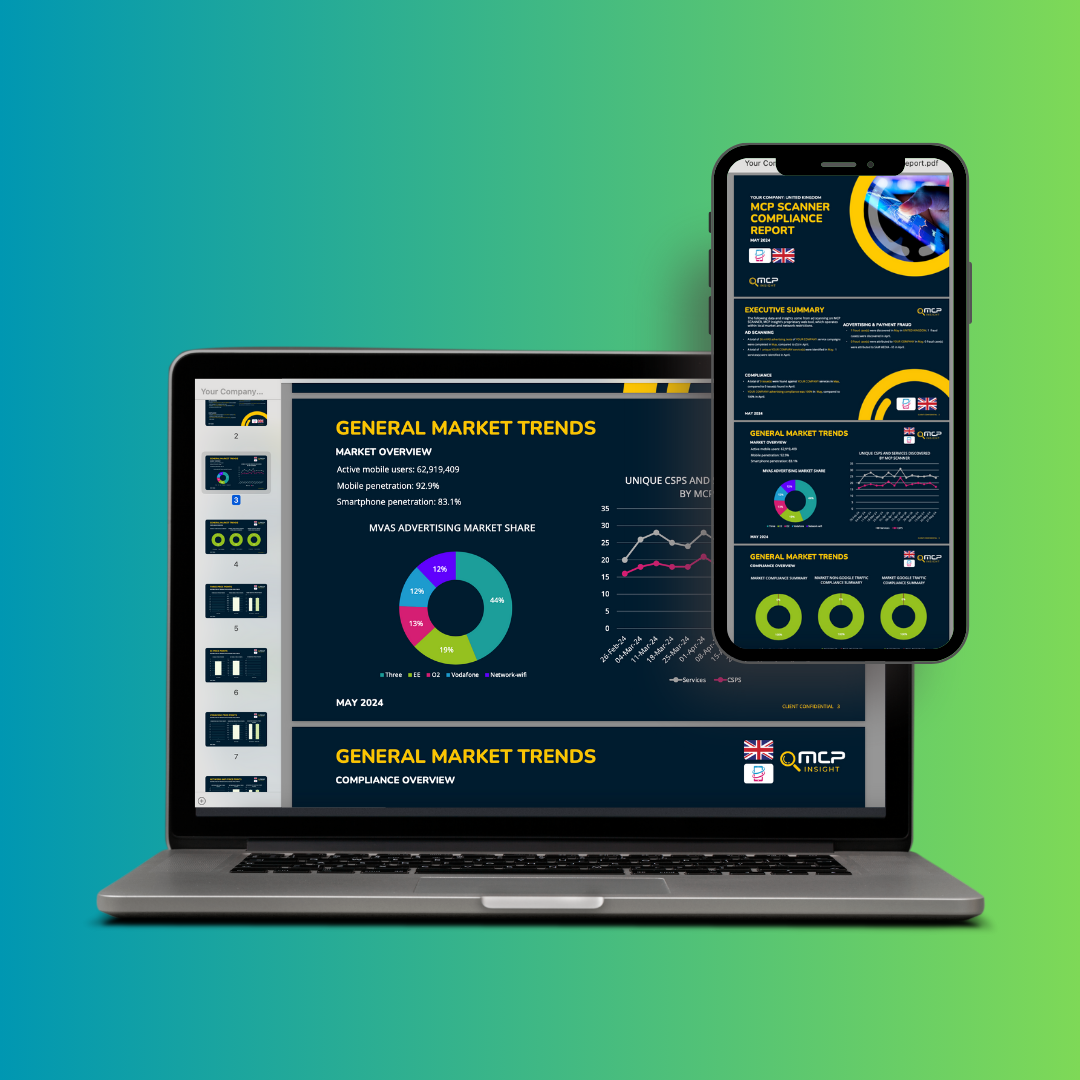
Recent data shows the market is almost evenly split between compliant and non-compliant services, with just over half meeting requirements .
In most markets, non-Google traffic tends to be driven by affiliates pushing harder for conversion. That can, and often does, lead to behaviour that sits outside formal compliance requirements.
We’re not here to police that. But we do see what happens next.
When non-compliance reaches a certain level, complaints follow. First to the operator, then to the regulator. And when that volume builds, the response is usually predictable. Service suspensions. Tighter rules. Fines. In some cases, entire market slowdowns.
If you’re operating in Bangladesh, it’s worth being conscious of how close you’re getting to that line. Because the long-term health of the market depends on where it’s drawn.
The hidden challenge: you’re not just competing, you’re navigating
One of the more overlooked aspects of Bangladesh is how fragmented the competitive landscape is. The top CSPs only account for a portion of total activity, with a long tail of smaller or less visible players making up more than half the market.
That creates a very particular environment.
You’re not just competing against a handful of known players. You’re competing against a constantly shifting mix of campaigns, creatives, and approaches.
It’s a bit like walking into a busy street market rather than a supermarket. There’s energy, opportunity, and demand, but it’s not neatly organised.
And that’s where most new entrants struggle.
Why robust market intel changes everything
At a glance, Bangladesh looks like a scale play. In reality, it’s a visibility play.
The CSPs that perform consistently well in this market tend to have a clear view of:
- which services are gaining traction right now
- what competitor campaigns actually look like in-market
- how users move from ad to payment page
- which billing flows are driving conversions
- where traffic is coming from and how it behaves
Without that, optimisation becomes reactive. With it, you start to make deliberate decisions.
You test faster. You avoid saturated angles. You spot opportunities earlier.
And crucially, you reduce the risk of running campaigns that look good on paper but fail in practice.
Bangladesh in 2026: a market worth getting right
There’s no question that Bangladesh will continue to grow.
Mobile-first behaviour is entrenched. Digital payments are expanding. Content demand is rising. But it’s not a market where you can rely on assumptions.
It rewards those who take the time to understand how it actually operates, not just how it’s described. Because in a market like this, the difference between scaling successfully and burning budget often comes down to one thing:
Seeing what others don’t.
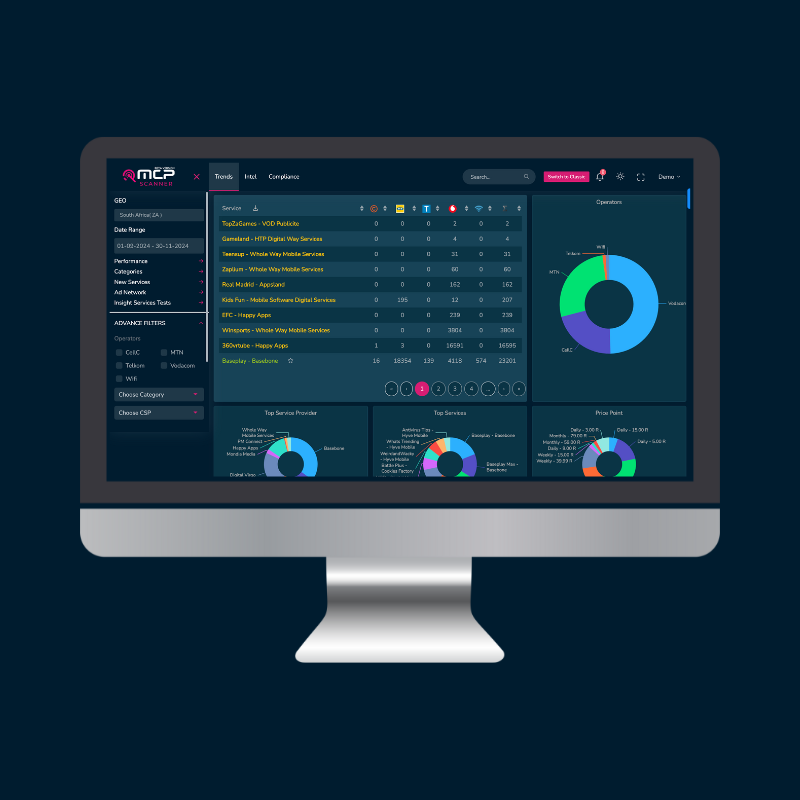
If you want to see which services are scaling, how competitors are structuring their campaigns, and where traffic is really coming from, we can show you.
Request a demo and explore the market from the inside.